
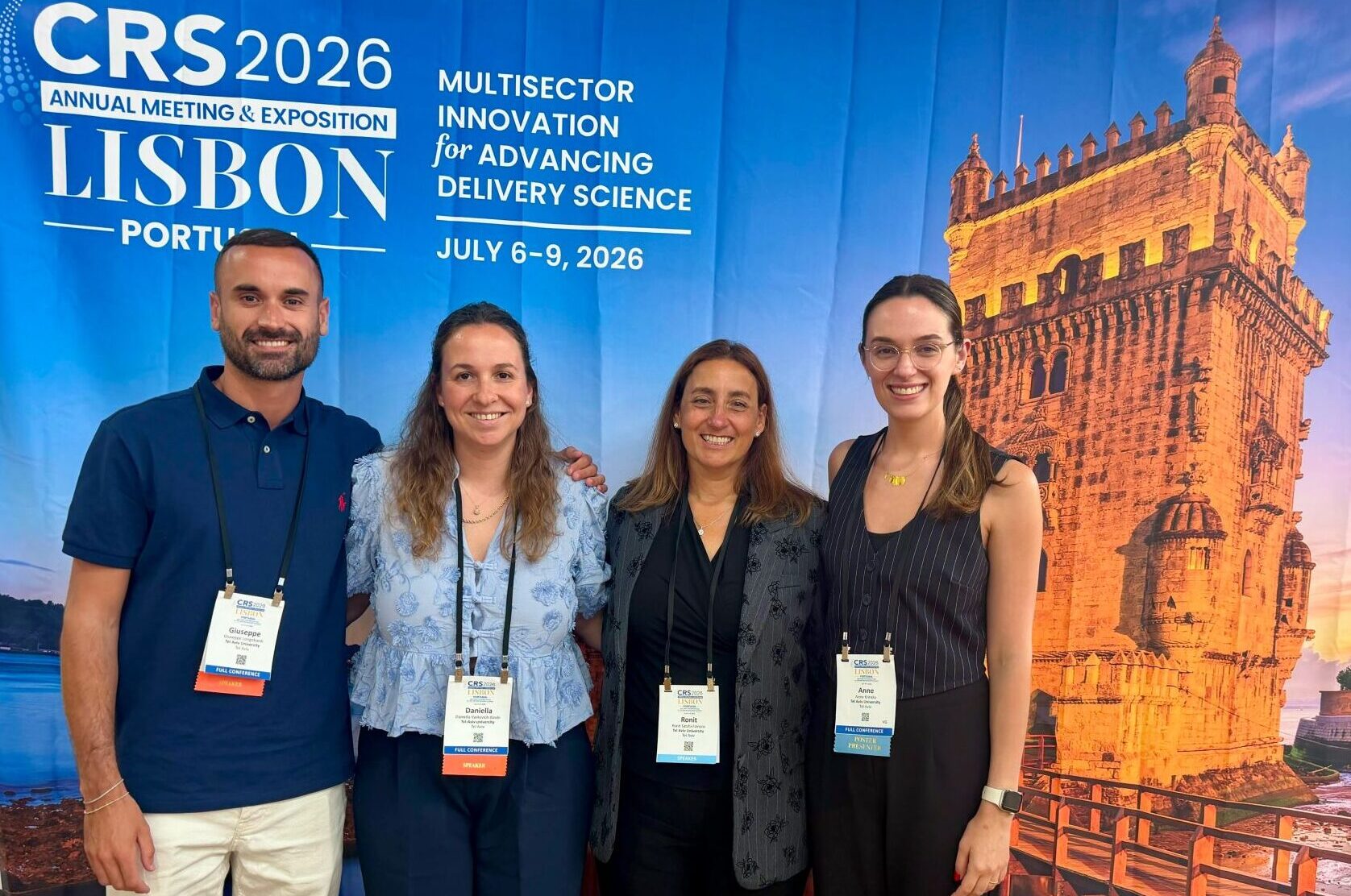
The TIMNano team took part in the 2026 Controlled Release Society Annual Meeting & Exposition, held in Lisbon from 6 to 9 July, contributing to the conference through scientific programme leadership, invited lectures and oral research presentations.
Prof. Helena Florindo served as Chair of the Annual Meeting Programme Committee, helping shape the scientific programme of one of the leading international events in drug delivery, controlled release and nanomedicine.
Several researchers involved in TIMNano presented work addressing different challenges in cancer treatment. Daniella Vaskovich-Koubi shared research on an APC-targeted nanovaccine for pancreatic ductal adenocarcinoma, exploring its potential to enhance immune responses and improve the activity of standard and KRAS-targeted therapies.
Rita C. Acúrcio presented a complementary strategy combining a dendritic cell-targeted nanovaccine with a nanoconjugate delivering a focal adhesion kinase inhibitor. The approach is designed to remodel the dense and immunosuppressive tumour microenvironment of pancreatic cancer, facilitating the infiltration of effector T cells.
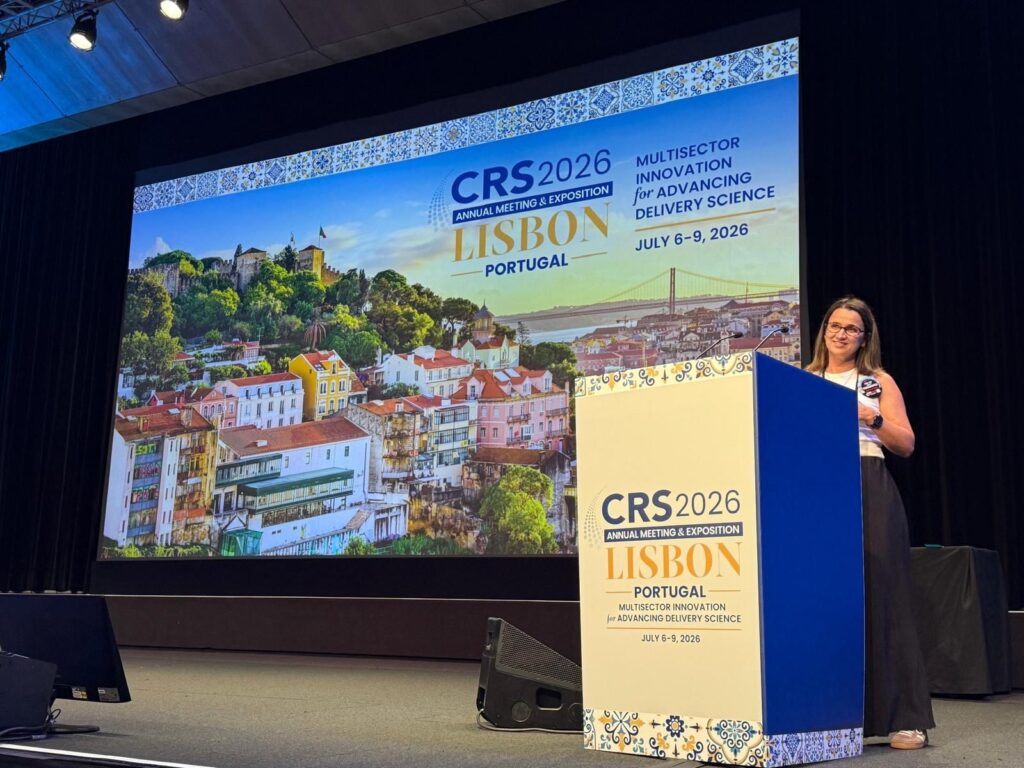
Giuseppe Longobardi presented a dual-drug nanoparticle therapy developed to address both primary tumours and brain metastases in BRCA1-deficient cancers, highlighting the potential of nanotechnology to support the delivery of combined therapeutic strategies across complex biological barriers.
Prof. Ronit Satchi-Fainaro joined the programme as an invited academic speaker, presenting advanced patient-derived 3D-bioprinted tumour models designed to reproduce interactions between cancer, stromal and immune cells. These vascularised models are being investigated as tools for drug development, target discovery and the prediction of patient-specific responses to treatment.
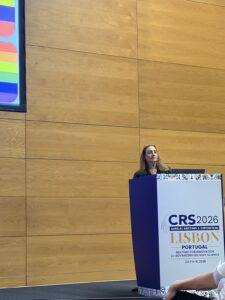
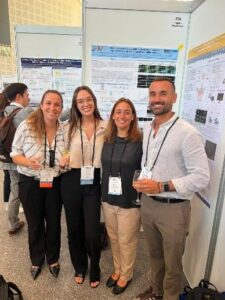
Together, the contributions presented in Lisbon covered several scientific areas connected to TIMNano—from dendritic cell targeting and tumour microenvironment modulation to nanoparticle delivery and advanced translational models.
CRS 2026 offered the team an opportunity not only to share research findings, but also to contribute to the wider scientific conversation on how nanomedicine can help address some of the most persistent challenges in cancer treatment.


